
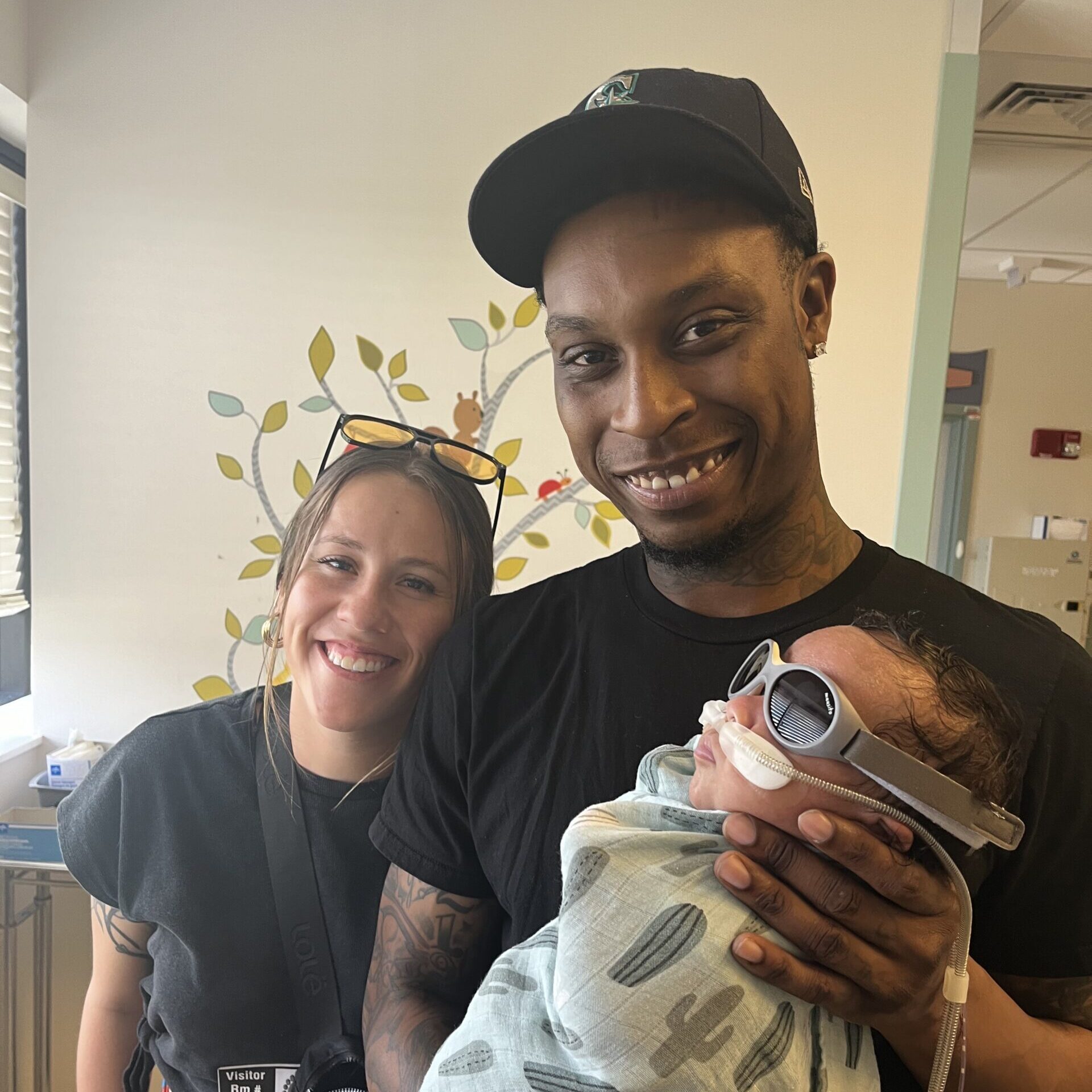
Alexis, Keyon, and Baby Synclair
This article is sponsored by Prolacta Bioscience.
At 11 weeks pregnant, Alexis and Keyon received news that turned their world upside down: their baby, Synclair, had developed an omphalocele, a rare congenital condition where the intestines and, in some cases, other organs grow outside the baby’s body through the belly button, enclosed in a thin, transparent sac.
The emotional weight of that moment was overwhelming. Like many NICU parents, Alexis turned to the internet for answers, but the results only brought more fear and confusion. Eventually, they learned that Synclair’s was classified as a giant omphalocele, meaning most of his abdominal organs were outside his body and the defect measured over 5 centimeters in diameter.
Synclair was born 5 weeks early, weighing 4 pounds, 7 ounces, after Alexis experienced the sudden onset of preeclampsia. He was rushed to the NICU, where Keyon followed to offer loving care to Synclair and take photos and videos for Alexis until she was well enough to visit.
Due to Synclair’s complex medical needs, it was vital for Alexis and Keyon to become active participants in his care. Fortunately, their journey of advocacy in the NICU and shared decision-making began before he was even born.
Starting NICU advocacy early
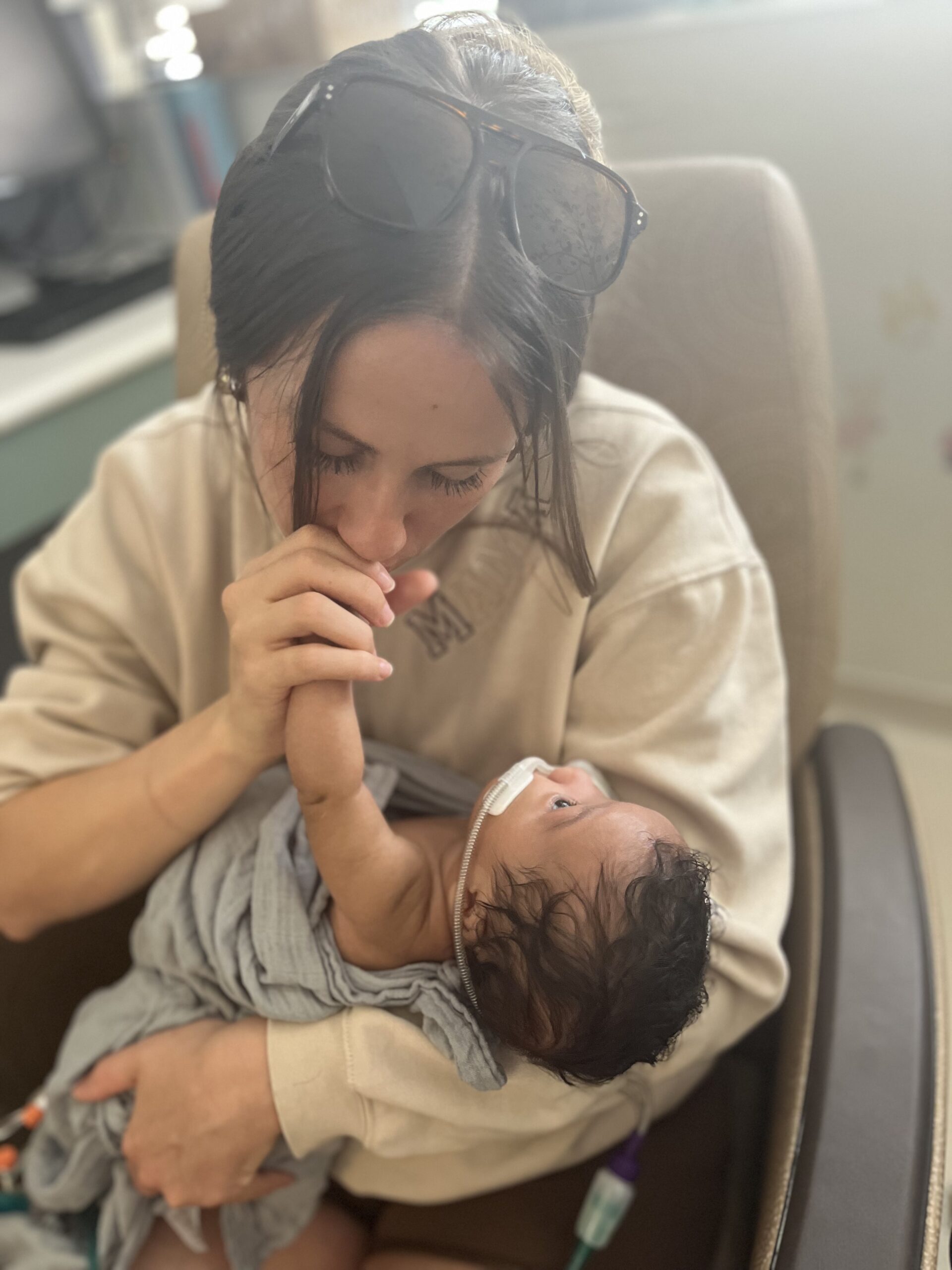
Alexis and Synclair
As part of the preparation for Synclair’s unique medical needs, Alexis and Keyon were enrolled in the Baby Matters program at St. David’s Medical Center in Austin, TX. The Baby Matters program provided them with a detailed tour of the hospital, a step-by-step explanation of what would happen during delivery, and time to ask critical questions in an honest, compassionate setting.
“The medical team didn’t sugarcoat anything,” said Alexis. “It was overwhelming at first, but now I realize how crucial that appointment was. It gave us clarity. It gave us a plan. And when the day of Synclair’s birth finally came, I felt surprisingly calm. I already knew what would happen, who would be there, and what to expect. That preparation made all the difference.”
This experience reflects a growing trend in NICU support: equipping families to participate in care decisions from the very beginning.
Advocating and becoming a part of the NICU team
During Synclair’s 96-day NICU stay, Alexis and Keyon spent eight to 10 hours each day in the NICU. “There wasn’t a single day that passed without at least one of us by his side.”
During that time, the nurses patiently taught them how to care for Synclair, including how to change the dressings on his omphalocele. Part of the routine care for Synclair’s omphalocele included applying a prescription topical antibiotic cream to his abdomen to support the healing process, followed by moist bandages to prevent the cream from soaking into sterile gauze or bandages securing everything in place.
Eventually, Alexis, Keyon, and Alexis’s parents took full responsibility for the dressing changes. This ensured consistency in Synclair’s care and reinforced the family’s role as empowered caregivers, one of the most tangible examples of NICU advocacy in action.
This hands-on participation helped build a trusting relationship with Synclair’s providers. As Synclair reached key medical milestones, the doctors felt confident in the family’s ability to care for him at home.
Shared decision-making in the NICU
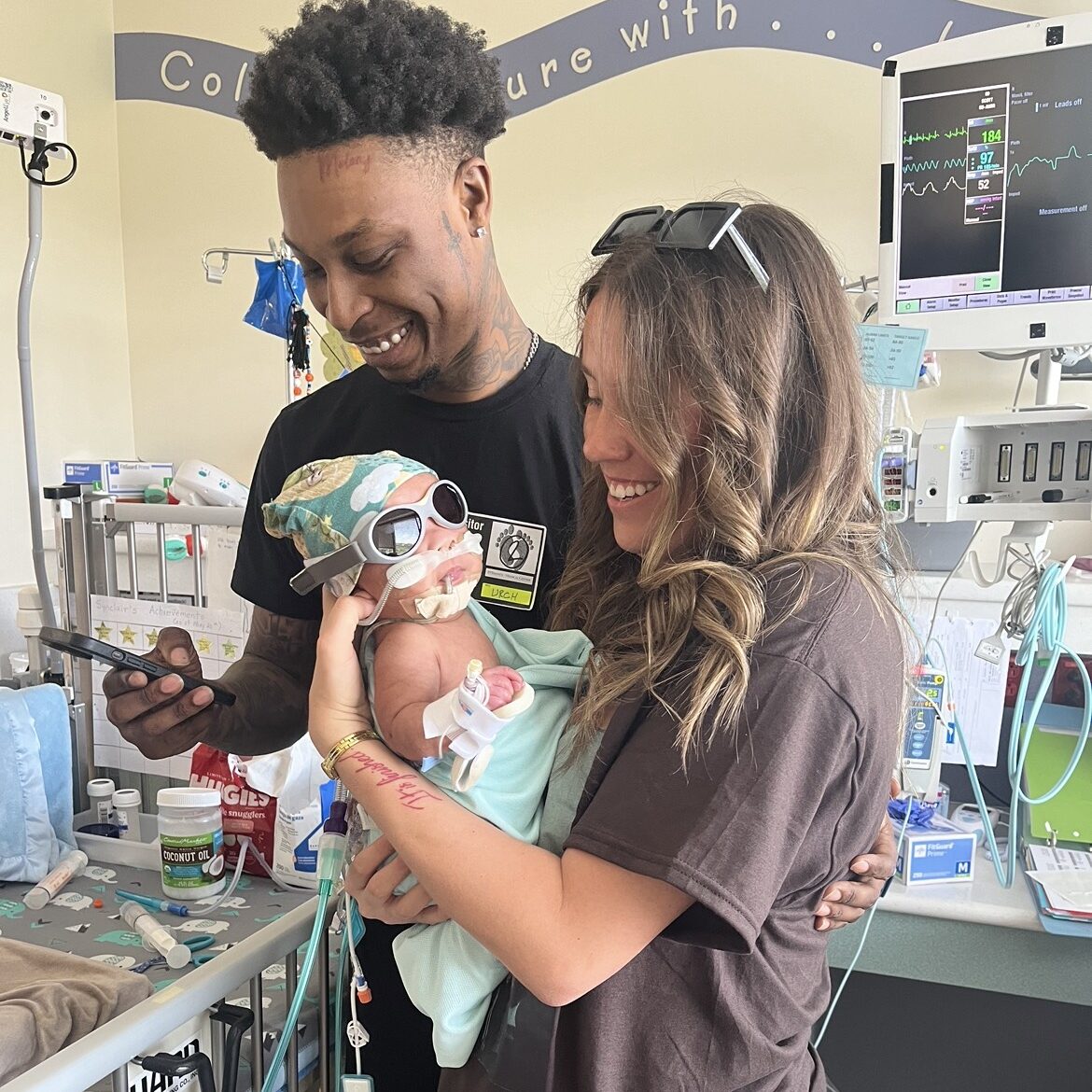 Shared decision-making is a cornerstone of advocacy and family-centered care in the NICU. It means doctors, nurses, and families make medical decisions together, blending clinical expertise with the lived experience and intuition of NICU parents.
One pivotal moment came when Synclair’s primary nurse said, “I think it’s time we start treating him like a normal infant.” Alexis and Keyon had been thinking the same thing, and the nurse’s suggestion confirmed their instincts.
“Even though Synclair was still on oxygen and a feeding tube, we made the conscious decision to spend quality, everyday moments with him as we would with any other baby,” said Alexis. “That shift was a pivotal moment for us and for Synclair. We knew there would be setbacks along the way, but it was in that moment we realized that he could overcome anything. That simple change in how we treated him made all the difference, and it gave him the chance to develop the way he needed to.”
NICU support at home
Thanks to a collaborative team approach and their own dedication, Alexis and Keyon left the NICU as confident, capable caregivers. They recreated a structured home routine similar to the NICU’s, complete with checklists and notes to track Synclair’s needs. This transition wasn’t easy, but their advocacy and preparation made it manageable.
Advice from one NICU parent to another
 Alexis now shares her story to uplift other NICU parents facing long or complex hospital stays.
“You are not alone. Even in those moments when it feels like you’re carrying the weight of the world on your shoulders, there are people who are there to lift you up.” Alexis credits Keyon, her parents, Synclair’s primary nurses and doctors, and the Hand to Hold staff for surrounding her with critical NICU support.
“The most powerful thing you can do is trust yourself. You know your baby better than anyone else. Speak up when you feel something isn’t right or when you have concerns. Your voice matters. You are the expert on your child, and your intuition is a gift.”
Read more about H. Res 236: Introducing the NICU Baby’s Bill of Rights