
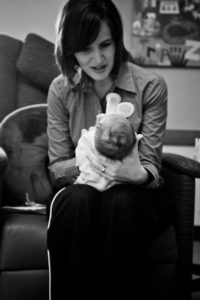
Courtesy of the Whitaker Family
Feeding disorders defined
A feeding disorder of infancy or early childhood is characterized by the failure of an infant or child under six years of age to eat enough food to gain weight and grow normally over a period of one month or more. Some families will experience minor feeding issues. Others may need a team of professionals to help identify problems and intervene appropriately.
Structural or physiological?
Feeding difficulties can generally be divided into two categories: those that result from structural problems or those that are physiological.
Structural feeding problems are physical, anatomical, or neurological abnormalities (e.g., cleft palate, esophageal stricture) that obstruct or impair the mechanics of eating.
Physiological feeding problems involve impaired function, such as weak muscle coordination, poor swallowing reflexes, or gastrointestinal issues like reflux.
In layman’s terms, feeding issues can stem from a medical condition or persisting developmental issue, or be a learned behavior left over from the NICU. Gastrointestinal issues, such as reflux or poor gastric emptying, are examples of physiological reasons that a baby may have difficulties eating. If gastrointestinal comfort and readiness are not present and your baby’s food intake is increased to promote weight gain, this situation can increase physical pain and discomfort a baby associates with eating. The long-term result of this imbalance can be oral aversion and defensiveness around mealtimes and eating.
What is feeding therapy?
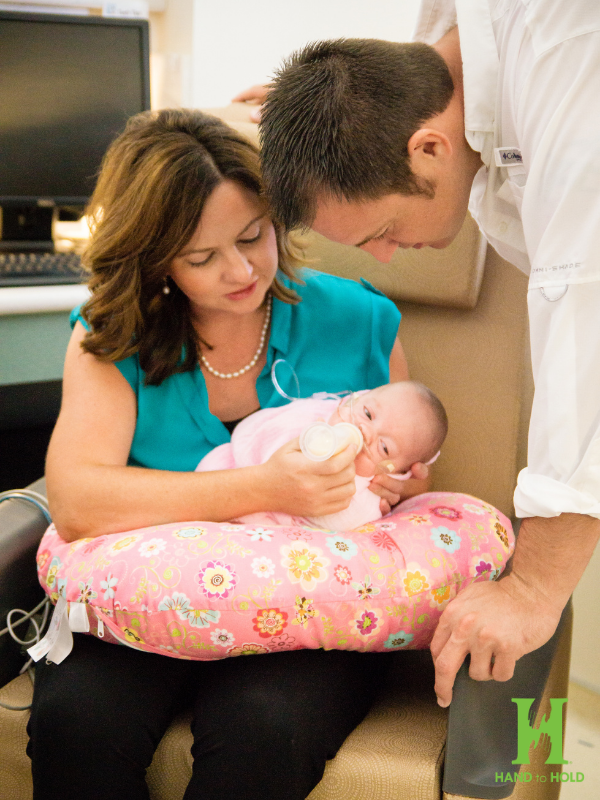 Feeding therapy will help address why your baby is having feeding difficulties in the first place. It can involve oral-motor therapy to address weak muscles in and around your child’s mouth, a behavioral feeding plan, or elements of both. A speech-language pathologist may be one of the team members to help your child learn to enjoy meal times again. But you may need to involve other medical professionals in your child’s treatment as well.
Sometimes babies will be evaluated by a team of health care professionals including, but not limited to, a gastroenterologist, registered dietician, pulmonologist, cardiologist, neurologist, lactation consultant and either a speech-language pathologist or an occupational therapist. This is an ideal way to form an integrated treatment approach that will address your baby’s multiple issues that affect feeding. Other times you will experience an evaluation by a speech- language pathologist or an occupational therapist who will compile information from all of you child’s medical specialists listed above in a thorough case history questionnaire.
Watch this video: Preemie Nutrition: Nutritional Needs & Fortification
Feeding tips for coming home from the NICU
Use the acronym “STEPS” to help you with feeding difficulties after your child has come home from the NICU.
S – Swaddle your baby during feedings. This will give your baby stability and support while they eat so they can focus on the “workout” of eating rather than stabilizing or controling his/her body.
T – Touch your baby. Make sure you spend as much time as you can in skin-to-skin contact with your baby. This goes for both parents!
E – Evaluate the flow of milk from the nipple or your breast. Avoid using high flow nipples and if the natural flow of your breast milk is fast, try pumping a few minutes prior to beginning the feeding.
P – Pace your baby. Recognize signs of stress, such as increased work breathing, furrowed eyebrows, coughing, red/watery eyes, and milk spilling out around the mouth. Be sure you give your baby the breaks he/she needs to breathe.
S – Position your baby in an elevated side-lying position. This feeding position decreases breathing effort, improves head and trunk alignment and allows for the liquid to collect in the cheek prior to the swallow.
Finding a feeding program or therapist
When you follow up with a developmental pediatrician or your baby’s primary care physician, inquire about professionals in your area that have expertise in infant feeding disorders. You may also contact therapy clinics or pediatric hospitals in your area, and ask if their speech-language pathologists or occupational therapists have expertise in infant feeding disorders.
About Anne Boon
Anne Boon, MS, CCC-SLP is a licensed Speech-Language Pathologist working at Dell Children’s Medical Center of Central Texas. She has consulted within the Leander Independent School District, worked in private practice in Cedar Park, Texas, as well as at Our Children’s House at Baylor Medical Center in Dallas, Texas. She has worked with numerous children with feeding difficulties and on multidisciplinary teams of health professionals to help these children reach their goals. She did her undergraduate work at The University of Texas at Austin and earned a Master’s degree from The University of Texas at Dallas. Contact her at annelboon@gmail.com.