
 This article is sponsored by Prolacta Bioscience.
When Leslie Hoops was induced at 33 weeks due to severe preeclampsia, she could only think at that moment whether her son would be delivered healthy. She wasn’t thinking about what would happen next, or what decisions would need to be made. But as soon as her son was born, those questions and decisions came quickly.
Leslie’s son was born with Duodenal Atresia, a congenital condition where a blockage occurs at the first part of the small intestine, known as the duodenum. Duodenal Atresia is usually detected during a prenatal ultrasound when excess amniotic fluid and a “double bubble” appearance indicate fluid in the stomach and duodenum.
Only a week after his diagnosis, Leslie unexpectedly delivered her son due to her worsening preeclampsia. Now she was being asked to process unfamiliar medical information and make decisions about their son’s care – regarding both the Duodenal Atresia and his prematurity. And like many NICU parents, Leslie and her partner were navigating these conversations while recovering from an unexpected delivery and coping with the fear and uncertainty of having a critically ill newborn.
This is where informed consent becomes especially important. Informed consent is the process in which a healthcare provider educates a patient about the risks, benefits, and alternatives of a proposed procedure or treatment.
What Does Informed Consent Mean?
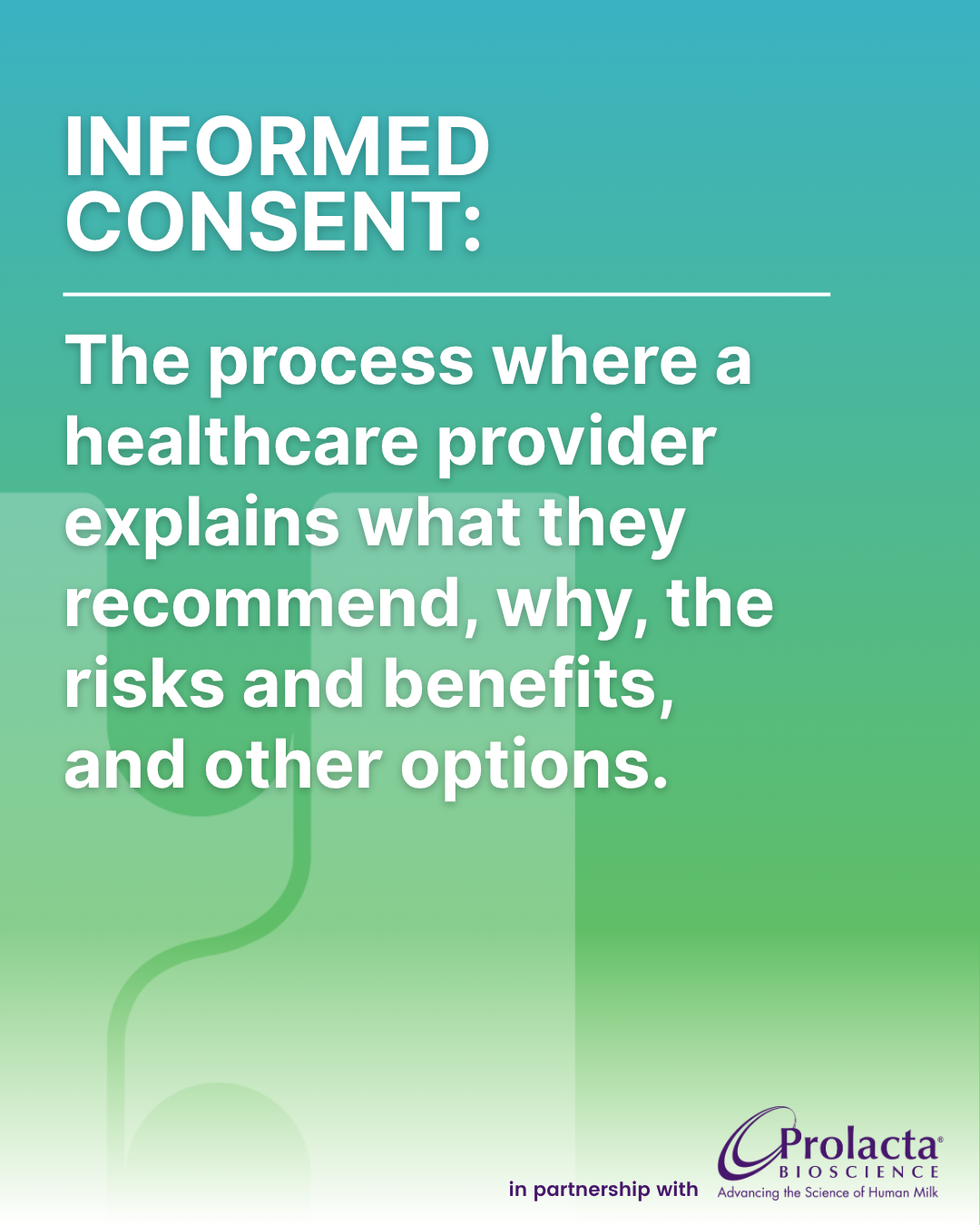 Informed consent is more than signing a form or giving permission for a procedure. The concept of informed consent involves three key components:
Disclosure: The provider must give the information in clear, layperson terms. This information needs to include:
- Diagnosis
- The proposed treatment
- The potential risks and benefits
- Any alternative treatment options and their risks and benefits
- The consequences if the patient chooses not to undergo the treatment
- Providers also need to give families the opportunity to ask questions and participate in conversations and decisions about their baby’s care
Capacity: The patient must have the mental ability to understand the information and make a rational decision.
Voluntariness: The decision must be made freely, without manipulation, coercion, or undue influence.
Informed consent helps parents feel informed, supported, and included in decisions about their baby’s care, an essential part of the NICU experience.
What Informed Consent Looks Like in the NICU
In the beginning, Leslie admits she was afraid to ask questions. She genuinely didn’t know where to begin. She was swirling in a haze of exhaustion from postpartum recovery, pumping, and still reeling from the fear and anxiety of her son’s early delivery. It was difficult to process any kind of complex information. “It felt like my brain was in slow motion while everyone was rushing around me,” she said.
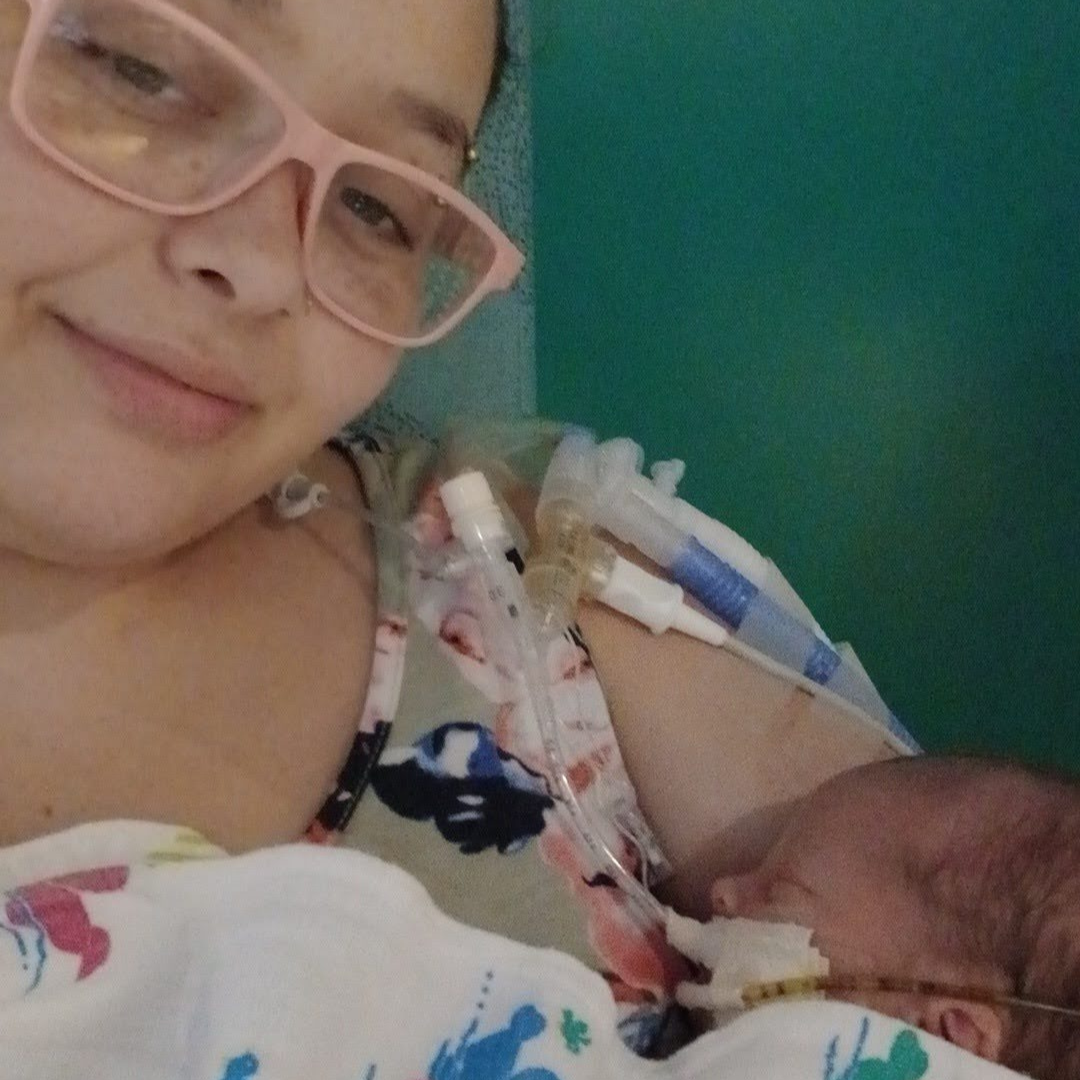 There were many times Leslie felt as if she was being asked to make big medical decisions before she fully understood what was happening. In those times, she remembers the NICU staff taking great care to walk through complex information and help her understand the decisions before her.
Her neonatologist drew her a picture to show how an NG tube would work to “feed” her son’s duodenum so they could rule out pyloric stenosis. He illustrated the problem they were trying to solve and how the tube could help.
And whenever Leslie asked for something to be explained again, the staff was patient and kind as they continued to make sure she understood.
Ultimately, the path of informed consent always started with having a conversation, followed by Leslie asking any followup questions. She would then read through the consent documents to make sure she fully understood any procedure before agreeing. Leslie gives credit to the medical staff for ensuring she was an active participant in her son’s daily care and in the decisions that affected his progress.
Understanding Your Baby’s NICU Care Through Research
Leslie didn’t fully understand what Duodenal Atresia was before her son’s diagnosis. Now she was trying to understand an unfamiliar condition while also processing information about procedures, risks, and decisions related to her son’s care.
“I did my own research because there were risks and procedures and words I didn’t understand,” she said.
As her son’s NICU stay progressed, Leslie began learning an entirely new medical language – terms like “Replogle tube,” a tube used to remove air and fluid from the upper digestive tract, and phrases like “to gravity,” meaning active suction is turned off while the tube remains in place to allow fluid to drain naturally.
Understanding this language was more than a matter of becoming familiar with the NICU. It helped Leslie better understand her son’s care, ask informed questions, and participate more fully in decisions. Her experience also illustrates an important challenge of informed consent in the NICU: Parents may be asked to consider complex procedures, risks, and treatment options while they are still learning the language being used to explain them.
Questions to Ask Before Giving Informed Consent
Leslie had three primary questions that helped her feel empowered when giving consent:
- “Will this option affect my son long term?”
- “Are there any alternatives?”
- “Why is this option the best?”
These questions helped give Leslie direction as she dived deeper in being informed about her son’s medical decisions. Overall, Leslie felt her decisions were respected.
Informed Consent in the NICU: Leslie’s Advice for Parents
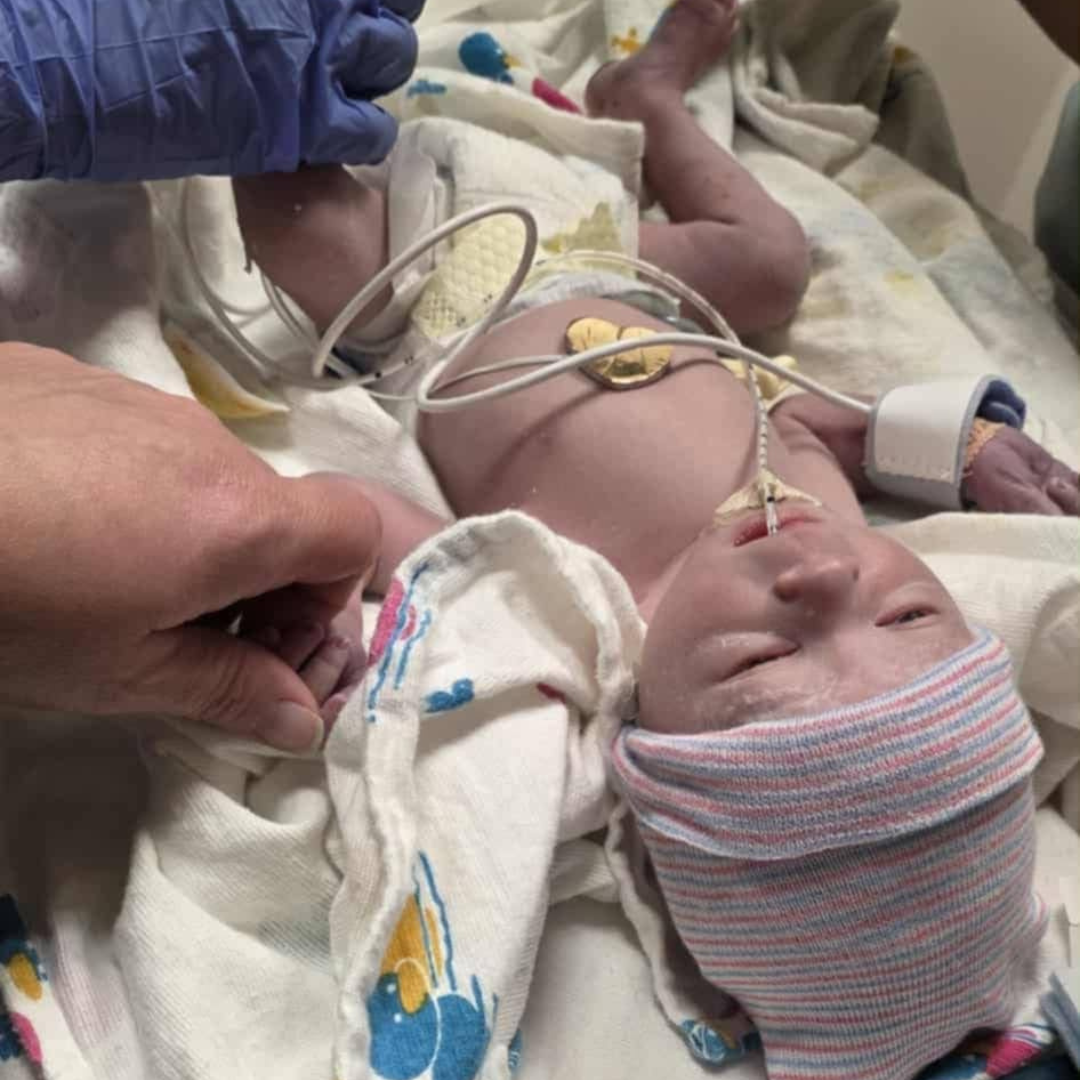
Keep asking questions.
Whenever Leslie didn’t understand something, she didn’t hesitate to ask. And when she asked for something to be explained again, the staff was patient and kind as they continued to make sure she understood.
It’s okay to press pause.
When she was being asked to make big medical decisions before fully understanding what was happening, Leslie would ask, “May I take a moment?” This allowed her more time to think and process the situation at hand. “I had to trust myself that I was making the best choice for my son,” she said.
Advocate for yourself and your baby.
Once you have asked questions, gathered the information you need, and understand the available options, you can make the decision you feel is best for your child. “It was my job to make sure his little voice was heard,” Leslie said.
NICU parents may not always feel prepared for the complex decisions placed before them. They may be learning unfamiliar medical terms while recovering from birth, coping with uncertainty, and trying to understand what their baby needs. But parents should feel informed, included, and supported throughout the decision-making process.
Informed consent does not mean parents have to become medical experts or navigate difficult decisions alone. It means receiving clear information, having opportunities to ask questions, understanding the available options, and being given the time and support needed to participate meaningfully in decisions about their baby’s care.
September is NICU Awareness Month. And your voice matters.
Being informed is an important part of advocating for your baby. Learn more about efforts to elevate the needs and rights of NICU babies and families:
Read more about H. Res 236: Introducing the NICU Baby’s Bill of Rights